The ClearDashboard is a resource to help you find hearing aids.

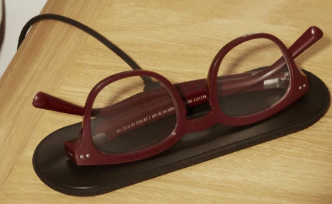
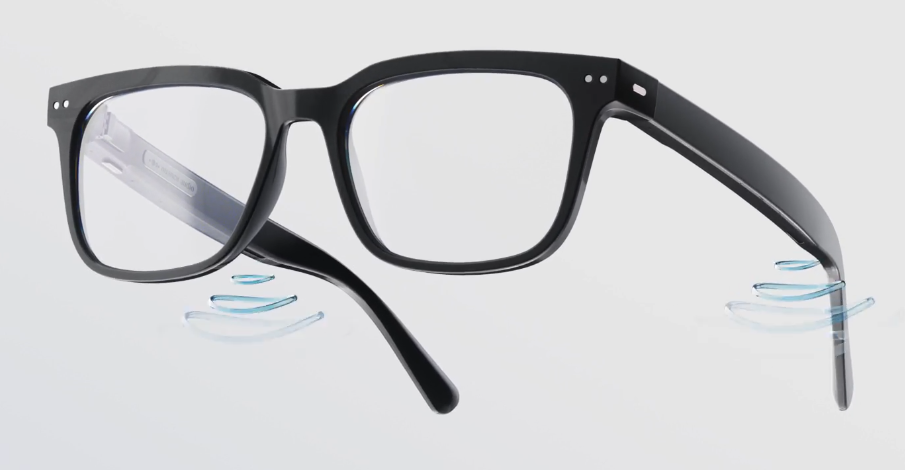
Nuance Audio
- Model
- Nuance Audio
- Company link
- nuanceaudio.com/en (Opens in New Tab)
- Color
- Black, Burgandy, Blue
- Price per Pair 1
-
$699.00

Glasses are available in 2 colors and 2 different shapes. The non-prescription glasses come with light-responsive transition lenses. Prescription lenses are an additional cost. Price may vary depending on purchase location and the type of prescriptive lenses that are chosen for vision correction.
Basic
- Model
-
Nuance Audio
- Company link
- Color
-
Black, Burgandy, Blue
- Price per Pair 1
-
$699.00
Glasses are available in 2 colors and 2 different shapes. The non-prescription glasses come with light-responsive transition lenses. Prescription lenses are an additional cost. Price may vary depending on purchase location and the type of prescriptive lenses that are chosen for vision correction.
General
- Power for the device (battery options)
-
Rechargeable
Manufacturer reports that battery usage will last approximately 8 hours per charge and this may vary based on environmental conditions and audio settings. Battery usage may decrease after 500 full charges (approximatlely 16 months) and 1000 full charges (approximately 32 months) as indicated by manufacturer.
- Charger
-
Yes
Charging pad for wireless charging. A USB-C cable is provided but a wall adapter will need to be purchased separately.
- How is the volume controlled?
-
App; On Eyeglass
A multi-function button on the right stem of the eyeglass can control On/Off, volume, pairing mode and a forced restart and reset.
- Programming personalization required before hearing aid use.
-
No
- How do I fine-tune the device?
-
App
There are 4 preset listening programs that can be adjusted within the app. Additional volume and other settings can be made once a listening program is selected such as background noise levels, frontal vs all around sound modes and customization of your own voice settings.
- Bluetooth used to connect to a smartphone app
-
Yes
- Bluetooth used to deliver (stream) sound from smart phone to hearing aid
-
No
- Remote control option
-
Yes
App; A separate remote control can be purchased as an accessory.
- On/Off Control
-
Yes
On/Off is one of the features of the multi-function button located on the right stem of the eyeglasses. On/Off can also be controlled in the app.
- Telecoil (T-Coil)
-
No
- Accessories
-
Yes
Contact the company or retail location for additional information and pricing for the remote control.
- Water resistant
-
Yes
IPX4
- Warranty
-
1-year warranty
- Can this device be returned?
-
Yes
30-day return policy. Check with the manufacturer for return policy and procedures. If not purchased directly from Essilor Luxoticca, Nuance Audio Glasses may be subject to retailer-specific conditions.
Support
- Customer Support Prior to Ordering
-
Yes
- Customer Support After You Receive the Device
-
Yes
User Experience
- Satisfied with opening the box and setting up the device 2
-
The score will be available when testing is complete.
- Satisfied with the amount of time it took to open the box and set up the device 3
-
The score will be available when testing is complete.
- Satisfied with the support information that was available (online help, documentation, instruction booklets, etc.) 4
-
The score will be available when testing is complete.
- Satisfied that opening the box and setting up the device was easy 5
-
The score will be available when testing is complete.
- The physical comfort of the device in the ear (after wearing it during the testing procedures) 6
-
The score will be available when testing is complete.
- The physical fit (can user get it in their ear and have it stay in their ear) 7
-
The score will be available when testing is complete.
- Appearance (does the user like the way it looks in their ear) 8
-
The score will be available when testing is complete.
- Set up time 9
-
The score will be available when testing is complete.
- Required assistance in setting up the device 10
-
The score will be available when testing is complete.
Listening Performance
- Sound quality of speech 11
-
The score will be available when testing is complete.
- Sound quality of music 12
-
The score will be available when testing is complete.
- Overall Listening Experience (OLE) 13
-
The score will be available when testing is complete.
- CLEARScore 14
-
The score will be available when testing is complete.
Last Updated: August 17, 2026
Glossary
-
^
Check with the manufacturer or retail location for current pricing information.
-
^
Satisfied with opening the box and setting up the device: The participants reported their satisfaction with the task of opening the box and setting up the device. The percentage scores, on a scale of 0% (Not at all satisfied) to 100% (Completely satisfied), were averaged across the number of participants completing this task.
-
^
Satisfied with the amount of time it took to open the box and set up the device: The participants reported their satisfaction with the amount of time it took them for the task of opening the box and setting up the device. The percentage scores, on a scale of 0% (Not at all satisfied) to 100% (Completely satisfied), were averaged across the number of participants completing this task.
-
^
Satisfied with the support information that was available (online help, documentation, instruction booklets, etc.): The participants reported their satisfaction with the amount of manufacturers supplied instructional materials and online support that were available to assist them in setting up the device. The percentage scores, on a scale of 0% (Not at all satisfied) to 100% (Completely satisfied), were averaged across the number of participants completing this task.
-
^
Satisfied that opening the box and setting up the device was easy: The participants reported their satisfaction with the ease of opening the box and setting up the device. The percentage scores, on a scale of 0% (Not at all satisfied) to 100% (Completely satisfied), were averaged across the number of participants completing this task.
-
^
The physical comfort of the device in the ear (after wearing it during the testing procedures): The participants reported their comfort with the device in the ear after wearing it for approximately 3 hours during the testing procedures. The percentage scores, on a scale of 0% (Uncomfortable) to 100% (Very comfortable), were averaged across the number of participants completing this task.
-
^
The physical fit (can user get it in their ear and have it stay in their ear):The participants reported whether they had any difficulty getting the hearing aid in their ear and having it stay in their ear. The percentage scores, on a scale of 0% (Poor fit) to 100% (Excellent fit), were averaged across the number of participants completing this task. If the hearing aid was not placed correctly in the ear, the researcher adjusted the device before testing was started with the hearing aids.
-
^
Appearance (does the user like the way it looks in their ear): The participants reported whether they were satisfied with the way the hearing aids looked in their ears using the mirrors that were provided to them for this task. The percentage scores, on a scale of 0% (Not at all satisfied) to 100% (Completely satisfied), were averaged with the number of participants completing this task.
-
^
Set up time: The Set-Up Time is the total amount of time it took the participant to prepare the hearing aids for use. It was measured from when they opened the Over-the-Counter (OTC) hearing aid box to when they told the researcher that they were finished with setting the hearing aid for their hearing and communication needs. Assistance was provided by the researcher if the participant was having difficulties with the set-up and asked the researcher for assistance – See Required Assistance in setting up the device.
-
^
Required assistance in setting up the device: A Yes answer indicates that the participant needed some type of assistance in setting up the device. This assistance varied from asking the researcher for any explanations, help with instructions on the use of the hearing aid, programming the device or inserting the device in their ear.
-
^
Sound quality of speech: The participants rated the sound quality of speech when listening to a speech sample, at conversational levels. The percentage scores, on a scale of 0% (Poor) to 100% (Excellent), were averaged across the number of participants completing this task. This score reflects the participants’ subjective opinion of the sound quality of speech based on their setting of the device.
-
^
Sound quality of music: The participants rated the sound quality of music while listening to a music sample through LogiTech computer speakers attached to a Dell laptop computer. The percentage scores, on a scale of 0% (Poor) to 100% (Excellent), were averaged across the number of participants completing this task. The participants’ favorite music artist, song or genre was played from a YouTube video for them to judge the music.
-
^
Overall Listening Experience (OLE): The participants reported their overall listening experience of the hearing aids which includes their perception of sound quality or audio, their emotional responses and personal preferences. This measure was taken after the participant wore the hearing aids for the approximate 3-hour testing procedure. The percentage scores, on a scale of 0% (Very poor) to 100% (Enjoyable), were averaged with the number of participants completing this task.
-
^
CLEARScore: Scoring method not yet finalized and will be shared soon.